Fred Niblo
From Wikipedia, the free encyclopedia
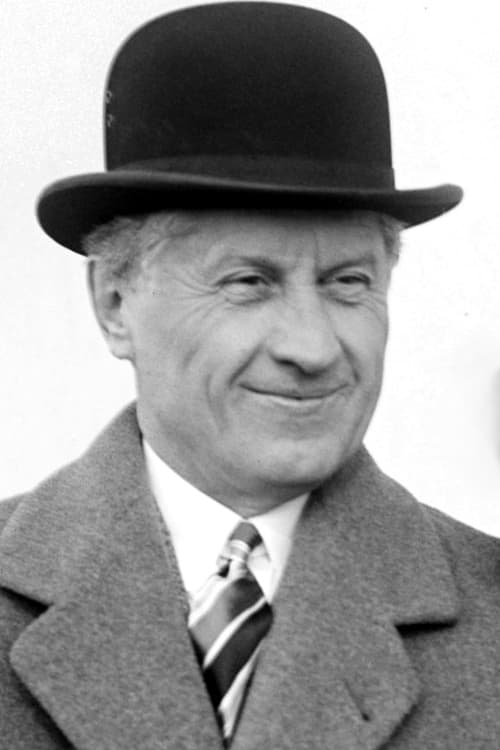
Fred Niblo (January 6, 1874 – November 11, 1948) was an American pioneer film actor, director and producer. Niblo was born Frederick Liedtke (several sources give "Frederico Nobile", apparently erroneously) in York, Nebraska, to a French mother and a father who had served as a captain in the American Civil War and was wounded at the Battle of Gettysburg. Using the stage name, Fred Niblo, Liedtke began his show business career performing in vaudeville and in live theater. After more than twenty years doing live performing as a monologist, during which he traveled extensively around the globe, he worked in Australia from 1912 through 1915, where he turned to the burgeoning motion picture industry and made his first two films.
As a Hollywood director, he is most remembered for several notable films beginning with his 1920 work The Mark of Zorro which starred Douglas Fairbanks. The following year he teamed up with Fairbanks again in The Three Musketeers and then directed Rudolph Valentino in Blood and Sand.
In 1924, Niblo directed the film Thy Name Is Woman. In 1925, Niblo was the principal director of the epic Ben-Hur that was one of the most expensive films of the day but became the third highest-grossing silent film in cinema history. Niblo followed up on this success with two major 1926 works, The Temptress starring Greta Garbo in her second film in America, and Norma Talmadge in Camille. Niblo went on to direct some of the greatest stars of the era including Joan Crawford, Lillian Gish, and Ronald Colman. In 1930 he directed his first talkie with two of the biggest names in show business, John Gilbert and Renée Adorée in a film titled Redemption.
Fred Niblo retired in 1933 after more than forty years in show business. The last sixteen years were used to make more than forty films, most of which were feature length projects. He was an important personality in the early years of Hollywood and was one of the original founders of the Academy of Motion Picture Arts and Sciences. In recognition of his role in the development of the film industry, he received a star on the Hollywood Walk of Fame at 7014 Hollywood Boulevard on February 8, 1960. His Ben-Hur film has been selected for preservation in the United States National Film Registry.
Fred Niblo died in New Orleans, Louisiana, and is interred in Forest Lawn Memorial Park Cemetery near his wife Enid Bennett in Glendale, California. His son with Josephine Cohan, Fred Niblo, Jr. (1903–1973) was a successful Hollywood screenwriter.